As should be obvious to my regular readers, I'm using the Axis of Eval to post raw thoughts. I don't do the work of rigorously thinking these thoughts through. I'm trying to narrate my mental work, in whatever state it is at the moment, with the hope to engage in dialogue with those of you with similar interests.
With this disclaimer out of the way, another take on the text/graphical axis.
In a comment on The Escape from the Tyranny of the Typewriter, John writes:
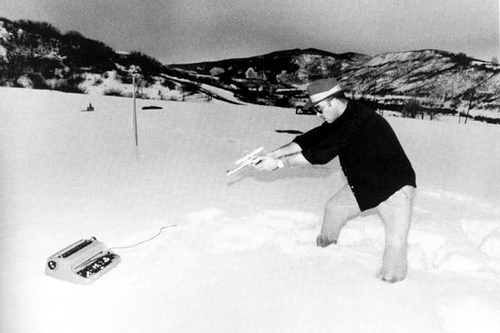
Okay, I'll play devil's advocate here. Text is the most articulate form of expression we have; it's so potent that even your graphical representation actually resorts to it. If you're going to introduce something else as well, that reduces simplicity, so there should be a very clear reason for it, and what you introduce should be in some sense manifestly The Right Thing.But the plain text we use with computers is hugely impoverished, compared to pre-computer texts. Compare to Dadaists' use of text (the art at beginning of text) or religious texts, which were widely "scribbled in the margins", and adorned with many graphical features.
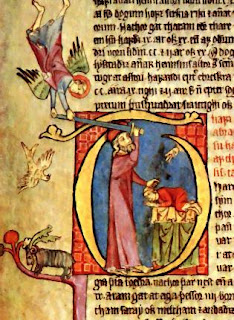
Or take mathematical text: it has rich, mostly informal structure for conveying information:

This brings us to computers' favorite: a sequence of code-points. That is simply in no way adequate to represent the exploits of the past, not to speak of the future.
Modern mathematicians are shoehorned into writing their fomulas in LaTex and having them presented to them in ASCII art in their mathematical REPLs.
So let's turn the tables: Plain text is a particular special case of using a general purpose graphical display to display sequences of code points. Furthermore, plain text stored in a file is also just a special case of arbitrary information stored in a file.